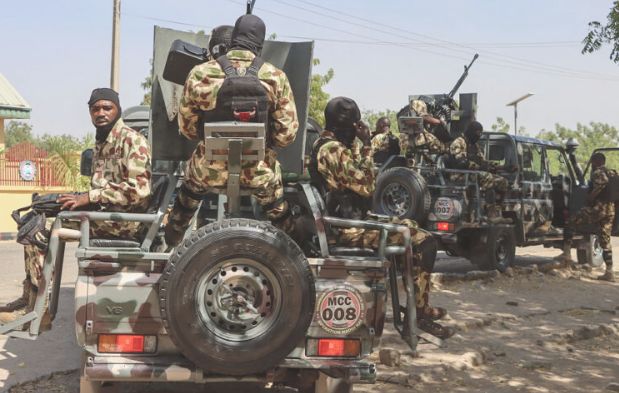
The military must urgently adjust its strategy to effectively counter the asymmetric tactics employed by Boko Haram and ISWAP. Security experts warn that a force perceived as predictable or slow to adapt risks giving insurgent groups a critical operational advantage on the battlefield.
According to Aro, institutional inertia and delayed responses are weakening the effectiveness of current military efforts. He stressed that insurgents thrive when state forces fail to evolve in line with changing threats, allowing them to exploit gaps in strategy and execution.
He explained that asymmetric warfare requires a fundamentally different approach from conventional combat. This includes deploying flexible tactics, empowering smaller and well-equipped units, and enhancing intelligence-driven operations to outmaneuver agile militant groups.
Aro also highlighted the need for improved surveillance systems, stronger counter-IED capabilities, and faster response mechanisms. These elements, he said, are essential in detecting threats early and minimizing the damage caused by insurgent attacks.
He concluded that the current situation reflects not just a resurgence in terrorist activity, but the growing adaptability of insurgent groups. Without rapid and sustained reforms, he warned, the gap between evolving threats and state response could continue to widen.