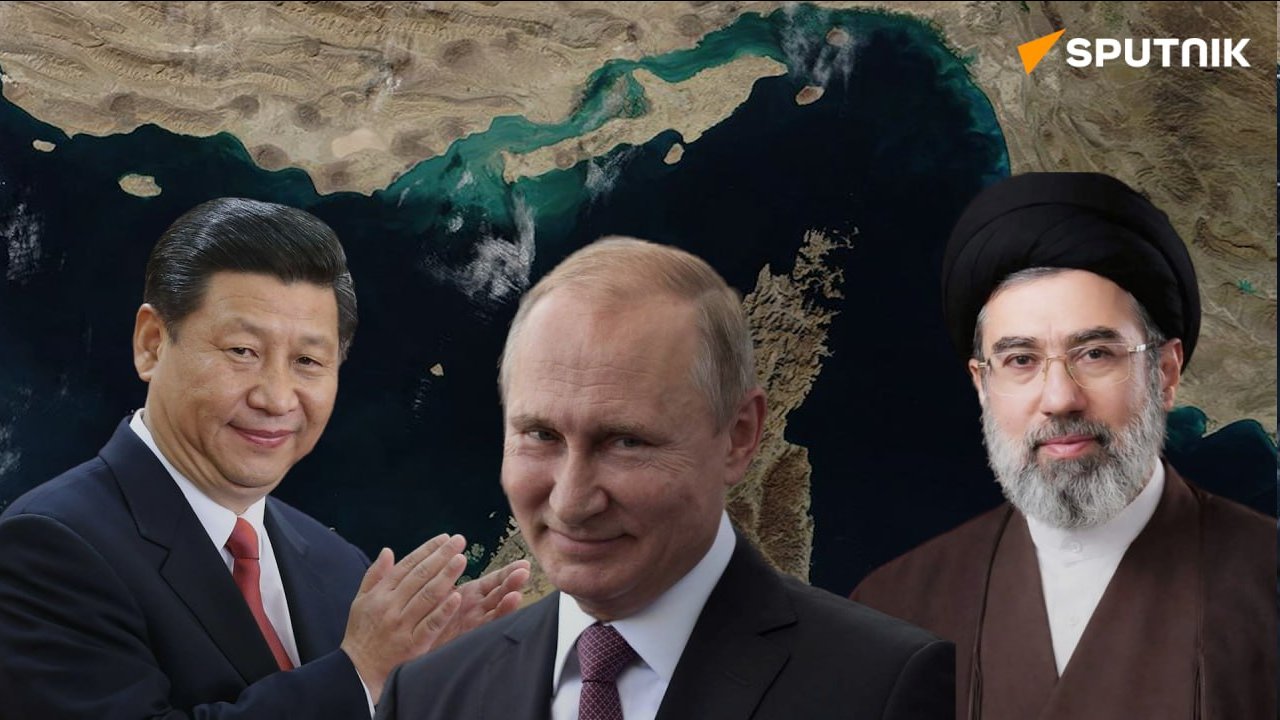
Analyst Pepe Escobar says Iran, China, and Russia are steadily shaping what he describes as a “New West Asia Order,” built around stronger regional cooperation and reduced dependence on Western influence. According to the analysis, Tehran and Beijing are now coordinating efforts to establish a new security and economic framework across the region while gradually sidelining the long-standing U.S. military presence.
The report claims Iran is using its strategic position around the Strait of Hormuz to strengthen financial independence and support the rebuilding of infrastructure damaged by years of sanctions and regional conflict. Tehran is also reportedly pushing for alternative trade and banking systems designed to reduce reliance on Western-controlled financial networks.
Russia, meanwhile, is said to be expanding its “Greater Eurasia Partnership,” connecting West Asia more closely with broader Afro-Eurasian economic and political structures. Moscow views the growing partnership with Tehran and Beijing as part of a wider multipolar strategy aimed at challenging Western dominance in global affairs.
Observers say the emerging Russia-Iran-China triangle reflects a major geopolitical shift in West Asia, where sanctions, pressure campaigns, and unilateral U.S. policies may be losing influence. If the alliance continues to deepen, analysts believe it could significantly reshape both regional security dynamics and the global balance of power in the years ahead.